
FAQs About Insomnia and CBT-I Treatment
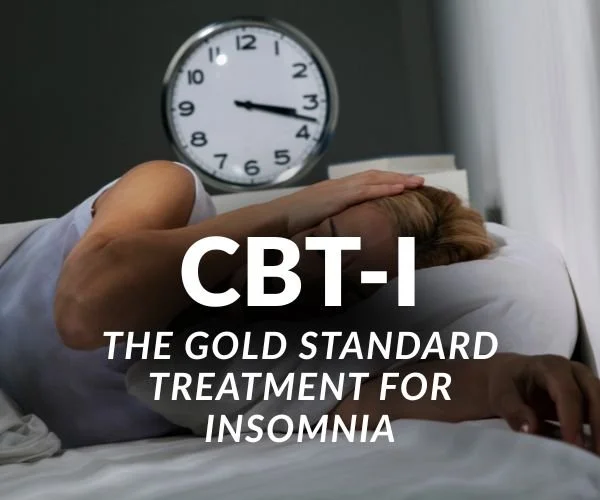
Can't Sleep? Your Questions About Insomnia and CBT-I, Answered
A conversation with Dr. Dunkin of BrainWell Psychiatry in Bastrop, Texas
Almost everyone has had a night — or a week — when sleep just wouldn't come. But when poor sleep drags on for months, it stops being an inconvenience and starts affecting your mood, your relationships, and your long-term health.
At BrainWell Psychiatry, we're now offering CBT-I (cognitive behavioral therapy for insomnia) — the gold-standard treatment for chronic insomnia — in an affordable, once-a-week group format that treats insomnia without medication. Kyla, who works in the practice and helps with TMS and other areas, sat down with Dr. Dunkin to ask the questions we hear most often from people struggling to sleep. Here's that conversation.
Why is sleep such a big deal for mental health?
Sleep isn't just about feeling rested — it's when your body does essential maintenance.
"All the cells in our body have byproducts. As our body is working, we make byproducts that need to be cleared out — and we have that in our brain, too. While we're sleeping is when the brain is able to clear those byproducts out," Dr. Dunkin explains. "Our organs are restored while we sleep — our kidneys work less, and many things in the body get repaired. That's why it's so important to get enough of it."
What actually counts as insomnia?
An occasional rough night isn't insomnia. The difference is how long it lasts — and what starts to happen in your head.
"We've all had periods of acute stress — a problem at work, a problem with our child — where we have a night or two of bad sleep. That's normal; that's acute insomnia," Dr. Dunkin says. "It becomes a real problem when it goes on for months, most nights, over a long period of time. And what really happens with insomnia is that we start worrying about sleep — and it's the worry about sleep that solidifies it."
What is CBT-I, and why is it considered the gold standard?
CBT-I stands for cognitive behavioral therapy for insomnia. It's the treatment recommended by the American Academy of Sleep Medicine, the American Academy of Family Physicians, and the American Psychiatric Association.
"It's the gold standard because it works, and it's enduring — it doesn't stop working the way a medication can," Dr. Dunkin says. "We look at cognition — the thoughts we have about sleep — and behaviors — the things we're doing to try to make sleep better that are often making it worse. Then we add something called sleep restriction, a sleep prescription that helps people get over the hump."
At BrainWell, CBT-I is an effective six-week program. It can be done one-on-one, but the group format is especially helpful: you get to hear how others are doing and how they're managing the same challenges — and it makes the program far more affordable.
What's the hardest part of the program?
Most people quickly grasp the thinking and behavior pieces. The part that gives people pause is sleep restriction — and Dr. Dunkin says it's also the part that matters most.
"One key behavioral component is not lying in bed awake. When we lie in bed and don't sleep, we train the brain to get in bed and not sleep. Everyone with insomnia knows the feeling — you're exhausted, you get in bed, and suddenly you're wide awake. That's conditioning," she says. "People understand that part. But the third piece — the sleep prescription — is the most important. I've had people tell me, 'I did CBT-I,' and I'll ask, 'Did you get to the sleep prescription and sleep restriction?' If they say no, then they haven't really done CBT-I."
What is sleep restriction, exactly?
It sounds counterintuitive, but the idea is to match your time in bed to the amount of sleep your body is actually producing.
"We look at how much sleep your body can produce — all the sleep you're getting in a day, including naps. No matter how bad your insomnia is, there's some level of sleep your body biologically requires, and you're going to get it. We figure out what that is, and then we only allow you to be in bed during that window," Dr. Dunkin explains.
"Say your biological sleep need is five hours and you want to be up at 7 a.m. — you won't get into bed until 1 or 2 in the morning. You might only get three hours the first night. Now you have some sleep deprivation, and the next night your body is so tired that it goes to sleep. We use that to push you past the point of getting in bed and worrying. Once you're sleeping well in that short window, we start adding time back on."
Importantly, this is never done in isolation — it only works alongside the other components of the program.
That sounds scary. Why does it work — and how do you make it manageable?
Dr. Dunkin acknowledges that the fear of getting only three or four hours is real. The program is built to make it tolerable.
"First, this is never day one — it happens after we've supported you and you have all the tools you need. We schedule it around your life; some people wait until a weekend or a vacation. And it usually only lasts a couple of days," she says. "The other important thing is that the first four hours of sleep are the most restorative. People tell me, 'I only got five hours, but I felt more rested than when I lie in bed tossing and turning,' because they're finally getting that deep, restorative sleep."
Which comes first — insomnia, or depression and anxiety?
They're closely linked, and the relationship runs both ways.
"Depression and anxiety can affect sleep, and insomnia can affect depression and anxiety — we see it both ways," Dr. Dunkin says. "We look at the timeline. In depression, we often see early-morning waking; as the depression improves, so does the sleep. But when insomnia has endured whether or not someone was depressed, we treat it as its own problem."
Anxiety plays a particular role. People with anxiety disorders — and often those with a Type A personality — have a higher chance of developing insomnia, because a brain wired to worry has an easier time worrying about sleep. But you don't need generalized anxiety to have insomnia. As Dr. Dunkin puts it, insomnia often ends up being "a problem with anxiety about sleep" — sometimes people simply worry about sleep and nothing else.
Is melatonin a good sleep aid?
Melatonin has a real role — but a narrower one than many people assume.
"Melatonin is that clock in our brain that says it's time to go to sleep and time to wake up," Dr. Dunkin says. "It's genuinely helpful for shift-work disorder, when someone has to sleep during the day, and for short-term situations like jet lag when we travel. Small doses can help shift that internal clock. That short-term use is really the most appropriate use for melatonin."
Why choose CBT-I over a sleep medication?
Medications can help, but they come with two persistent problems.
"If medications worked, people wouldn't be in my office — they'd take a pill and be done. But people get used to medications and they quit working, or they cause side effects. Some people sleep well but can't open their eyes and feel groggy for hours," Dr. Dunkin says. "CBT-I doesn't have those side effects, and it doesn't stop working."
There's another advantage: CBT-I gives you a skill for life. "You'll probably have insomnia again at some point — something comes up, especially if you're more prone to it. But now you have the tool. You dust off your CBT-I information and ask, 'What do I need to do to get my sleep back?' It's a tool people carry for the rest of their lives."
When should I stop trying to fix it on my own and see a professional?
The test is simple: is it affecting your life?
"With insomnia — or really any mental health issue — the question is whether it's impacting your day and your life," Dr. Dunkin says. "Are you falling asleep when you shouldn't? Are you irritable with your children? Is it affecting your ability to work? If it's impacting your life, that's the time to reach out for help."
What can I start doing tonight to sleep better?
Dr. Dunkin says a surprising number of people improve with just a few changes. Her practical starting tips:
Reserve the bed for sleep. No phone, no TV, no lying awake in bed — that trains your brain to associate the bed with not sleeping. If you don't fall asleep within 15–20 minutes, get up, sit in a chair, and do something boring until you feel sleepy again.
Only get in bed when you feel sleepy. If you're wide awake, it's not the right time. Wait for the heavy-eyelid, sleepy feeling — then you're much more likely to fall asleep quickly.
Watch the caffeine. As we age, we tolerate it less. Cut off caffeine — and even chocolate, if you eat a lot of it — after about 1 p.m.
Come in for a landing. Don't try to hit the bed like a jet on an aircraft carrier. Approach sleep like a plane easing in — a wind-down routine of at least 30 minutes, off your phone, that signals your body it's time to rest.
Park your worries on paper. Keep a pen and pad by the bed. Write down what's on your mind and pick a specific time the next day to deal with it — "Tomorrow at 10 a.m. I'll look at this" — then set it down and let it go. You're not a good problem-solver while trying to fall asleep.
How is BrainWell's approach different from just handing out a prescription?
It starts with education, not a pill.
"People often want a quick fix — they want to take a pill — so a lot of what we do is education. We help people understand what normal sleep actually looks like. Everybody wakes up during the night; that's normal," Dr. Dunkin says. "Then we do CBT-I. You don't have to stop your medication to start — a lot of people are on medication and still not sleeping well, so we begin CBT-I, get them sleeping better, and then we can talk about weaning off if they want to."
For some, that motivation is medical. "There's new evidence that long-term use of antihistamines — the kind in a lot of over-the-counter sleep aids like Benadryl — raises the risk of dementia. People tell me, 'I don't want to take these anymore, but if I stop, I won't sleep.' That's a great time to do CBT-I."
What's at stake if insomnia goes untreated?
Dr. Dunkin points to three areas that insomnia can quietly erode: your general mental health, including anxiety and depression; your long-term brain health, including dementia risk; and your relationships. Good sleep protects all three.
This article is for general educational purposes and is not medical advice. CBT-I is appropriate for specific conditions and patients; talk with a qualified psychiatric provider about your individual situation. Individual results vary.
Struggling with sleep in the Bastrop area?
BrainWell Psychiatry now offers CBT-I in an affordable, once-a-week group format — the gold-standard, non-medication treatment for chronic insomnia. If poor sleep is affecting your days, it may be worth a conversation.
Contact BrainWell Psychiatry